


The world of cannabis is filled with nicknames. Whether you call it weed, pot, ganja, or kush, most people turn to this plant for the same reasons: to unwind, find relief, or simply enjoy a moment of peace. However, because cannabis was misunderstood for so many decades, a lot of misinformation has spread. It can be hard to tell what is a scientific truth and what is just an old story passed down between friends.
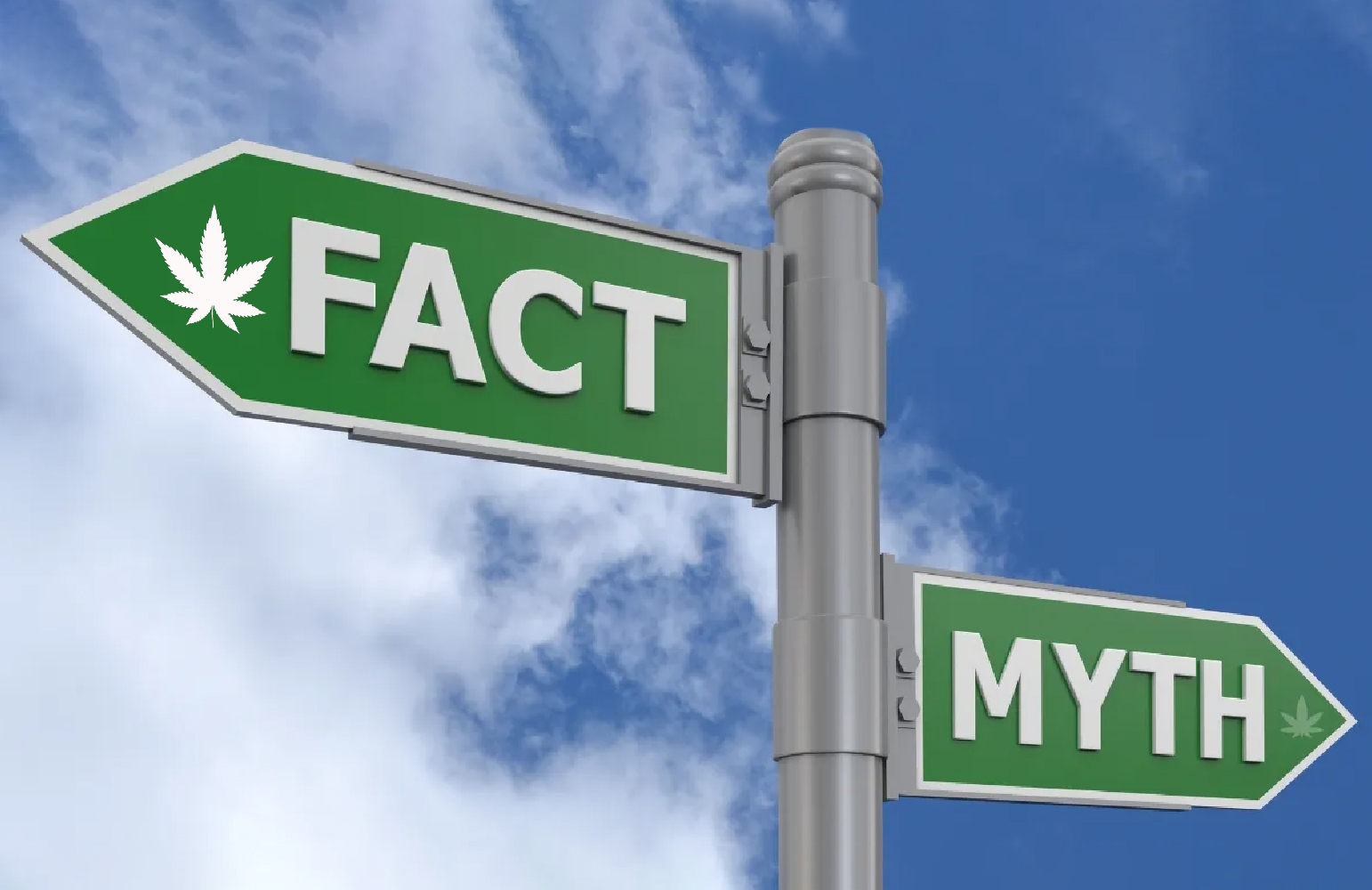
If you have ever found yourself searching the internet to verify a stoner rule or a scary headline, you are not alone. This guide breaks down the most common cannabis myths vs facts about marijuana and provides the actual facts so you can make informed decisions.
Many people believe that because cannabis is a plant, it is impossible to become dependent on it. While it is true that cannabis has a lower addiction rate than substances like nicotine or alcohol, it is not zero.
The Fact: Some users develop what is known as Cannabis Use Disorder. This happens when the brain becomes used to the presence of the plant and struggles to function normally without it. About one in ten people who use cannabis regularly may find it difficult to stop, even if it starts affecting their daily life.
There is a common belief that the longer you hold smoke or vapor in your lungs, the stronger the effects will be. You might see people holding their breath until they turn red, thinking they are absorbing more THC.
The Fact: Your lungs absorb the vast majority of active compounds like THC almost instantly—usually within the first few seconds of inhalation. Holding your breath for a long time does not actually get you higher. Instead, the lightheaded feeling you get is usually caused by a lack of oxygen to the brain, not extra cannabinoids.
For years, people were told that trying a single joint would inevitably lead to using much harder or more dangerous substances. This idea was used to create fear around the plant for a long time.
The Fact: Most people who use cannabis do not go on to use harder drugs. While people who use harder substances often started with cannabis, they also usually started with alcohol or tobacco. Progression to other substances is more often linked to social environment, genetics, and personal circumstances rather than the plant itself.
Also read: How to Choose the Best Cannabis Dispensary in Morris County
You might have heard that smoking weed kills brain cells or permanently lowers your IQ. This myth was largely based on older studies that did not account for other lifestyle factors.
The Fact: Current research shows that for healthy adults, moderate cannabis use does not cause structural brain damage. However, it can affect short-term memory and focus while you are under the influence. The real concern is for the developing brain. Since the human brain continues to develop until the mid-20s, heavy use during teenage years can impact how the brain builds connections.
Almost every dispensary or blog will tell you that Sativa gives you energy while Indica puts you on the couch. We have used these labels for decades to predict how a strain will feel.
The Fact: These labels actually describe the physical appearance of the plant (leaf shape and height), not necessarily the chemical effect. The way a strain feels depends on its specific mix of cannabinoids and terpenes. There are many Indica strains that feel uplifting, and many Sativa strains that can make you sleepy. It is better to look at the lab results and terpene profile than just the Indica or Sativa label.
You may also like: Decoding Cannabis: Indica, Sativa, or Hybrid—Which is Right for You?
As more places legalize marijuana, there is a feeling that anything bought in a store is perfectly healthy and carries no risk.
The Fact: While legal cannabis is tested for pesticides, mold, and heavy metals—making it much safer than street products—it still carries risks. Overconsumption can lead to intense anxiety, paranoia, or a rapid heart rate. Furthermore, high-potency concentrates and edibles can be very overwhelming for beginners. Legalization means the product is regulated, but you still need to use it responsibly.
Some people think that because the plant contains THC, you can simply eat the raw flowers or leaves to feel the effects.
The Fact: Raw cannabis contains THCA, which is a non-psychoactive acid. It will not get you high. To turn THCA into the THC that provides a buzz, the plant must be heated. This process is called decarboxylation. This is why we smoke it, vaporize it, or cook it into butter. Eating raw cannabis might provide some nutritional benefits, but it won’t provide the typical effects people expect.
In the early days of medical talk, glaucoma was the only condition people associated with weed. Some still believe its medical uses are very limited.
The Fact: The medical applications of cannabis are vast and growing. It is used to manage chronic pain, reduce nausea during chemotherapy, control seizures in certain types of epilepsy, and help with muscle spasticity in conditions like Multiple Sclerosis. It is also becoming a popular tool for sleep disorders and anxiety management under medical supervision.
Many shoppers go into a store and ask for the highest THC percentage available, thinking that 30% THC will always be better or stronger than 20% THC.
The Fact: THC is only one part of the story. The entourage effect suggests that all the compounds in the plant work together. A strain with 18% THC and a rich variety of terpenes might provide a much more pleasant and potent experience than a 30% THC strain that has no flavor or other cannabinoids. Quality is about the whole profile, not just one number.
This is perhaps the oldest myth in the book. There is often a fear that taking too much can be fatal in the same way as other substances.
The Fact: There are no documented cases of a human dying solely from a toxic overdose of cannabis. The parts of the brain that control breathing and heart rate do not have many cannabinoid receptors, so the drug does not shut down vital organs. However, taking too much can be extremely uncomfortable and may lead to accidents or secondary health issues, so caution is still required.
Understanding Cannabis Myths vs Facts, we hear on the street and what science says, helps everyone have a better experience. Cannabis is a complex plant with many benefits, but it works best when used with knowledge and respect.
If you’re a cannabis enthusiast looking for high-quality flower, edibles, tinctures, or beverages, visit Gas & Grass Dispensary. We offer one of the best cannabis selections in the area.


Leave A Reply Now